
Victoria’s Secret Shifts From Air Freight to Ocean Shipping to Mitigate Tariffs, Increasing Inventory Levels
Victoria’s Secret is moving shipments from air freight to ocean shipping to reduce tariff exposure, impacting inventory planning, lead times, and supply chain management.

Victoria’s Secret is adjusting its transportation mode strategy by shifting more shipments from air freight to ocean freight, a move designed to mitigate rising tariffs but one that is also reshaping the company’s inventory management and supply chain planning.
As a result of longer ocean transit times, the retailer expects total inventory to increase by a mid-teens percentage in fiscal Q4, according to Chief Financial and Operating Officer Scott Sekella. Ocean shipping requires the company to take ownership of goods earlier, driving higher on-hand inventory across its distribution network. Business trends and tariff impacts further contributed to the inventory buildup.
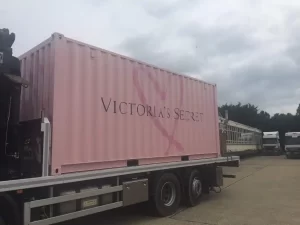
In an August update, Sekella said tariff mitigation efforts for fiscal 2025 were largely locked in. Looking ahead to fiscal 2026, Victoria’s Secret plans to rely less on expedited air cargo and more on cost-efficient ocean transportation to offset import duties and stabilize logistics costs.
The company expects a net tariff impact of $90 million for fiscal year 2025, which ends in late January, with $65 million concentrated in the fourth quarter. These added costs continue to influence freight mode selection, landed cost calculations, and inventory positioning.
To manage tariff exposure and supply chain costs, Victoria’s Secret has implemented multiple mitigation strategies, including vendor cost optimization, sourcing diversification, selective price increases, and a more balanced air-versus-ocean freight mix, Sekella said during a December earnings call.
“Tariffs will be a headwind through the first half of next year as they continue to come on,” he noted.

This is not the first time the retailer has adjusted its freight strategy. In 2022, Victoria’s Secret shifted shipments away from air freight after supply chain and transportation costs rose by roughly $300 million during the 2021 holiday season, largely due to heavy reliance on air cargo.
Beyond transportation, the company is also working to diversify its global sourcing footprint to reduce tariff risk. However, Sekella emphasized that re-sourcing and supplier transitions require long lead times and will not deliver immediate results.
“We are actively looking at re-sourcing out of different countries to further mitigate in 2026, but that takes time,” he told investors.
Currently, Victoria’s Secret sources products from Vietnam, Sri Lanka, Mexico, Indonesia, India, Egypt, China, Cambodia, and Bangladesh, highlighting the complexity of managing a multi-country supply chain.
For logistics providers, warehouses, and distribution partners, the shift from air to ocean freight underscores a broader industry trend: cost-driven modal shifts increase inventory levels, storage requirements, and the need for stronger demand forecasting, lead-time planning, and warehouse capacity management.