
Trump Imposes 10% Import Surcharge After Supreme Court Blocks Global Tariffs
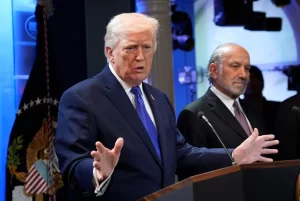
Washington, D.C. — President Donald Trump signed a proclamation Friday imposing a 10% surcharge on imports entering the United States, following a Supreme Court decision that struck down his earlier global tariffs under the International Emergency Economic Powers Act (IEEPA).
The move marks a significant escalation in U.S. trade policy and signals potential broader tariff actions in the coming months.
When Does the 10% Import Surcharge Take Effect?
-
Effective Date: February 24
-
Duration: Through July 24 (150 days maximum under Section 122)
-
Legal Authority: Section 122 of U.S. trade law
-
Maximum Allowed Rate: Up to 15% for 150 days
Under Section 122, the president can impose temporary tariffs of up to 15% for 150 days without congressional approval.
Although Trump announced the 10% surcharge in the official proclamation, he later stated that he intends to raise the rate to 15% “effective immediately.” As of now, the White House has not issued updated documentation reflecting that increase.
What Goods Are Exempt From the 10% Tariff?
The proclamation includes broad exemptions, citing “the needs of the U.S. economy.” Exempted categories include:
-
Critical minerals
-
Pharmaceuticals

Passenger vehicles
-
Certain medium- and heavy-duty trucks
-
Select electronics
-
Aerospace parts
-
Agricultural goods (including beef, tomatoes, and oranges
Trade Agreement Exemptions
The surcharge does not apply to:
-
Products compliant with the United States-Mexico-Canada Agreement (USMCA)
-
Textile and apparel imports covered under the Dominican Republic-Central American Free Trade Agreement (CAFTA-DR)
Additionally, the 10% surcharge will not stack on top of existing sector-specific tariffs imposed under Section 232.
 Why Section 122 Instead of IEEPA?
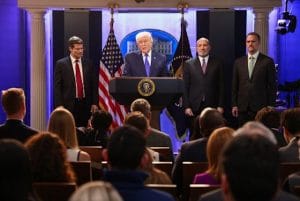
The action comes after the Supreme Court ruled 6–3 against Trump’s earlier use of IEEPA to impose sweeping global tariffs.
Justice Brett Kavanaugh, in dissent, argued that:
-
IEEPA was intentionally written in broad terms.
-
It provides presidents with flexible economic tools to address foreign threats.
-
Even if IEEPA did not authorize the tariffs, other statutes could.
Kavanaugh emphasized that Trump could rely on:
-
Section 232 (national security tariffs)
-
Section 201 (safeguard tariffs for unfair trade practices)
He wrote that the Court’s majority effectively concluded the president “checked the wrong statutory box.”
Additional Trade Investigations Underway
Alongside the 10% surcharge, U.S. Trade Representative Jamieson Greer announced the administration will initiate accelerated Section 301 investigations into the trade practices of multiple U.S. trading partners.
Section 301 allows the U.S. to respond to unfair foreign trade practices and has previously been used in tariff actions against China.
What Happens Next?
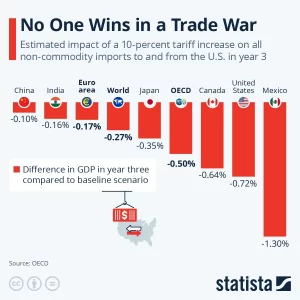
During a White House press conference, Trump described the five-month tariff period as a transitional phase while the administration conducts investigations to implement what he called “fair tariffs — or tariffs, period — on other countries.”
Trump acknowledged that alternative legal authorities, such as Sections 232 and 201, require longer procedural timelines than his previous attempt under IEEPA.
Prior to the Supreme Court ruling, the administration had already implemented sector-specific tariffs under Section 232 on:
-
Steel
-
Automobiles
-
Furniture
Further tariff expansion now appears likely as the administration pivots to other statutory tools.
Conclusion:
The new 10% import surcharge under Section 122 represents a temporary but sweeping shift in U.S. trade policy following the Supreme Court’s rejection of Trump’s broader IEEPA-based tariffs.
With potential increases to 15% and expanded Section 301 investigations underway, businesses and global trading partners should prepare for heightened tariff uncertainty in the coming months.