
Trump Considers 25% Tariffs on Countries Trading With Iran
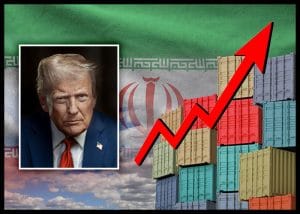
President Donald Trump has directed his administration to begin preparing a framework that could impose tariffs on countries that trade with Iran, signaling a tougher stance on Iran-linked commerce and its global partners.
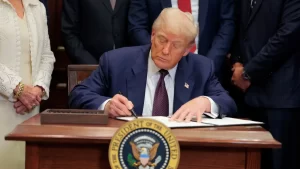
In an executive order signed Feb. 6 and effective Feb. 7, Trump instructed the Secretary of State, Secretary of Commerce, and the U.S. Trade Representative to develop rules and guidance for possible tariffs on imports from countries that purchase or import goods or services from Iran.
 No Fixed Tariff Rate—But 25% on the Table
The order does not immediately impose new tariffs, nor does it set a fixed rate. Instead, it allows for the introduction of “an additional ad valorem duty — for example, 25%” on U.S. imports from countries that “directly or indirectly” conduct business with Iran.
This move follows Trump’s January Truth Social post, in which he said the U.S. would apply a 25% tariff on imports from countries “doing business” with Iran. At the time, the White House did not release formal documentation or clarify what activities would qualify as “doing business.”
National Security and Economic Justification
According to the executive order and a related White House fact sheet, the administration says the policy is intended to protect U.S. national security, foreign policy interests, and the economy. The order also notes that the approach could be adjusted or withdrawn if global or political circumstances change.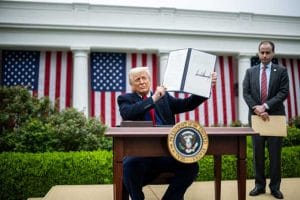
Trump plans to rely in part on the International Emergency Economic Powers Act, which grants presidents broad authority to regulate economic activity after declaring a national emergency.
However, that authority is currently under scrutiny. The Supreme Court is reviewing constitutional challenges related to the scope of presidential tariff powers and is expected to issue a ruling in the near future.
Part of a Broader Trade Strategy
The Iran-related order closely mirrors a similar directive issued last month targeting countries that sell oil to Cuba. In that case as well, Trump instructed cabinet officials to first assess the scope and impact of potential tariffs before taking action.
Together, the moves suggest a broader strategy of using tariffs as leverage against countries engaging in trade with U.S. geopolitical adversaries, rather than imposing immediate, across-the-board dutie s.