
5 Logistics Trends to Watch in 2026: What Shippers Need to Know
Freight markets may look shipper-friendly in 2026, but rising last-mile costs, ocean overcapacity, air cargo complexity, rail uncertainty, and trucking carrier risks will shape logistics strategy across all modes.
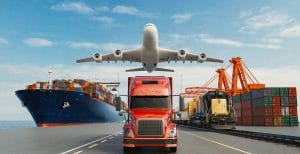
More stable freight conditions won’t guarantee an easy year for logistics managers in 2026. While transportation capacity remains widely available and contract rates are still negotiable across parcel, ocean, air, rail, and trucking, growing uncertainty around tariffs, surcharges, and service reliability could disrupt supply chains.
According to insights shared with Supply Chain Dive, shippers must prepare for a market where cost opportunities coexist with operational risk. Below are the five key logistics trends to watch in 2026—and what they mean for shippers.
1. Last-Mile Delivery Costs Will Keep Rising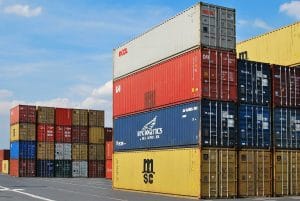
Last-mile delivery will remain one of the biggest cost pressures for shippers in 2026. Additional rate hikes and surcharges from FedEx and UPS are expected to push parcel pricing even higher.
The TD Cowen/AFS Freight Index projects Q1 2026 ground parcel rates per package to sit 38.9% above January 2018 levels, marking a 5.4% year-over-year increase after record highs in late 2025.
Transportation, once a secondary cost, has now become a top-three expense for many companies—especially e-commerce businesses. A key challenge is that frequent in-year pricing adjustments now matter more than traditional annual general rate increases.
Shipper takeaway:
Despite rising costs, competition for parcel volume remains intense. Well-prepared shippers can still secure concessions, but negotiations will take more time, data, and persistence.
2. Ocean Shipping Capacity Will Continue to Expand
Ocean freight will remain one of the most shipper-friendly modes in 2026. Contract negotiations, typically held between March and May, are expected to favor shippers—particularly on the Transpacific eastbound trade lane.
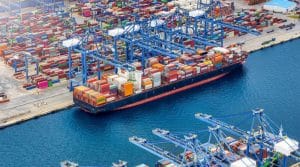
Experts from Drewry Supply Chain Advisors note that long-standing overcapacity will persist, even as new vessels continue entering the market. Capacity is expected to grow 3.7% in 2026, adding roughly 1.5 million TEUs, with even stronger growth projected for 2027.
However, high container volumes mean ports and inland trucking networks are already operating near capacity. Any disruption—such as geopolitical events or delays in reopening the Suez Canal—could quickly strain the system.
Shipper takeaway:
Ocean rates are unlikely to be the main concern in 2026. Instead, shippers should prioritize schedule reliability, visibility, and operational monitoring to avoid delays and unexpected costs.
3. Air Cargo Networks Will Become More Complex
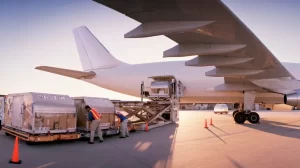 Air cargo shippers will face growing complexity in 2026 as trade policy shifts, geopolitical tensions, and export controls reshape global networks.
Rather than linear point-to-point routes, cargo flows are increasingly moving through multi-hub networks, where disruptions in one region can ripple worldwide. While the air freight market has largely stabilized after years of volatility, growth is expected to remain in the low single digits.
Shipper takeaway:
Flexibility and transparency will be critical. Shippers that use advanced analytics and AI-driven planning tools to anticipate disruptions, reroute shipments, and communicate delays in real time will be best positioned to control costs and protect margins.
4. Rail Freight to Normalize as Merger Uncertainty Looms
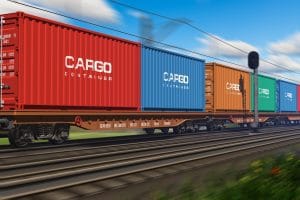 Rail freight is expected to return to a more normalized operating environment in 2026, shaped by leaner inventories, industrial production trends, and energy markets.
At the same time, the potential merger between Union Pacific and Norfolk Southern will remain a major wildcard. If approved, it would create the first U.S. transcontinental railroad, raising concerns about competition, rates, and service reliability.
Past rail mergers have led to prolonged service disruptions, leaving some shippers wary as regulators closely scrutinize the proposal.
Shipper takeaway:
Rail should be integrated into longer-term logistics and inventory planning rather than short-term fixes. Shippers should also monitor regulatory developments closely and build contingency plans.
5. Trucking Will Focus on Carrier Survivability and Reliable Capacity
In 2026, trucking strategy will shift away from chasing the lowest rates and toward reliable, sustainable capacity.
With slim margins, inflation pressure, and multiple carrier bankruptcies already occurring, carrier survivability is becoming a real concern. As weaker players exit the market, shippers face increased risk when relying solely on discounted pricing.
According to analysts at DAT iQ, shippers are no longer just buying capacity—they’re buying risk.
Ongoing uncertainty around tariffs, regulatory scrutiny, and the upcoming review of the USMCA trade agreement is also causing manufacturers and industrial shippers to delay investment decisions.
Shipper takeaway:
Strong carrier relationships will be essential. Shippers should have open discussions about cost structures, flexibility, and capacity commitments to ensure long-term stability.

Preparing for Logistics in 2026
While freight markets in 2026 offer rate opportunities across multiple modes, success will depend less on price alone and more on resilience, visibility, and strategic partnerships. Shippers that balance cost savings with operational reliability will be best positioned to navigate another year of uncertainty.