
Tariff Uncertainty Reshapes North American Supply Chains
The year 2025 marked a defining chapter for global supply chains, shaped by unprecedented policy volatility and mounting operational pressure. As U.S. trade policy shifted rapidly under Donald Trump, businesses were forced to navigate an environment where tariff decisions could change overnight, disrupting long-established trade flows and cost structures.
Against this backdrop, supply chains proved both vulnerable and resilient. Companies restructured sourcing strategies, accelerated inventory movements, and leaned heavily on logistics agility to maintain continuity. From surging port volumes driven by cargo frontloading to strained cross-border relations in North America, 2025 underscored how deeply trade policy, infrastructure, and labor dynamics are intertwined.
This overview reflects on the key forces that defined the year—tariffs, diplomacy, congestion, and consolidation—and sets the context for understanding how businesses adapted in the face of sustained uncertainty.
-
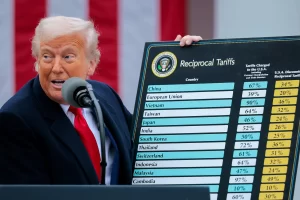
Rapidly shifting U.S. trade policy under Donald Trump created extreme uncertainty across global supply chains in 2025. Tariffs were frequently announced, adjusted, paused, or threatened with little notice, forcing businesses to operate in near-constant reaction mode.
-
Tariff pressure accelerated supply chain restructuring, with companies moving sourcing and production away from China amid the risk of tariffs reaching up to 200%. Many importers also rushed shipments into the U.S. ahead of anticipated tariff hikes, a strategy known as cargo frontloading.
-
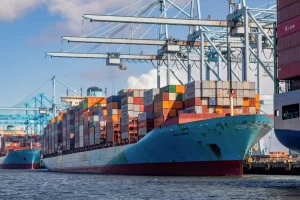
Port congestion surged due to frontloading, especially at major U.S. gateways.
-
Port of Los Angeles recorded its second-best February ever and later its highest single-month cargo volume on record.
-
Port of Long Beach also experienced significant volume increases and is on track to exceed its 2024 cargo record.
-
-
Trade relations with Mexico and Canada were thrown into flux.
-
Mexico used a largely effective diplomatic approach, securing multiple tariff pauses for goods compliant with the United States–Mexico–Canada Agreement (USMCA).
-
Canada’s response was more turbulent, involving retaliatory measures that were later reversed, contributing to strained relations and cross-border trade disruption.
-
-
USMCA exemptions provided partial relief, particularly for automakers and other North American manufacturers, though uncertainty remains as the agreement’s formal review approaches next year.
-
Additional supply chain stressors compounded the chaos, including labor strikes by Canada Post workers and major industry shakeups such as the announced Union Pacific–Norfolk Southern railroad merger, which raised new questions about competition, pricing, and network control.
Tariffs Impact on B&J by Client Type
International Businesses (China → Canada / U.S.)
-
Tariffs push companies to route goods through Canada and delay U.S. entry.
-
Result: More demand for Canadian warehousing, storage, and re-routing.
E-commerce (Amazon FBA/FBM, Shopify)
-
Sellers frontload inventory ahead of tariffs.
-
Need storage, FBA prep, and flexible release.
-
Result: Higher volumes and longer storage cycles.
U.S. Companies Entering Canada
-
Avoid cross-border shipping per order.
-
Prefer local Canadian fulfillment.
-
Result: Increased need for Canadian 3PL partners.
Canadian Companies Entering the U.S.
-
Need consolidation and smart timing due to tariffs.
-
Result: More reliance on cross-border coordination and staging.